NewHurt this week? Book a free 20-minute injury screen.See complimentary screens

Just hurt? Start here (919) 555-0100

Return to Sport & Performance

Bridge the gap between finishing rehab and performing at your best.

Cost
From $175
Typical plan
Initial testing session, then 55-minute sessions 1–2 times a week; most athletes spend 6–12 weeks in this phase
Insurance
When return-to-sport work is part of a medically necessary rehab plan, such as late-phase ACL rehab, insurance often covers it.
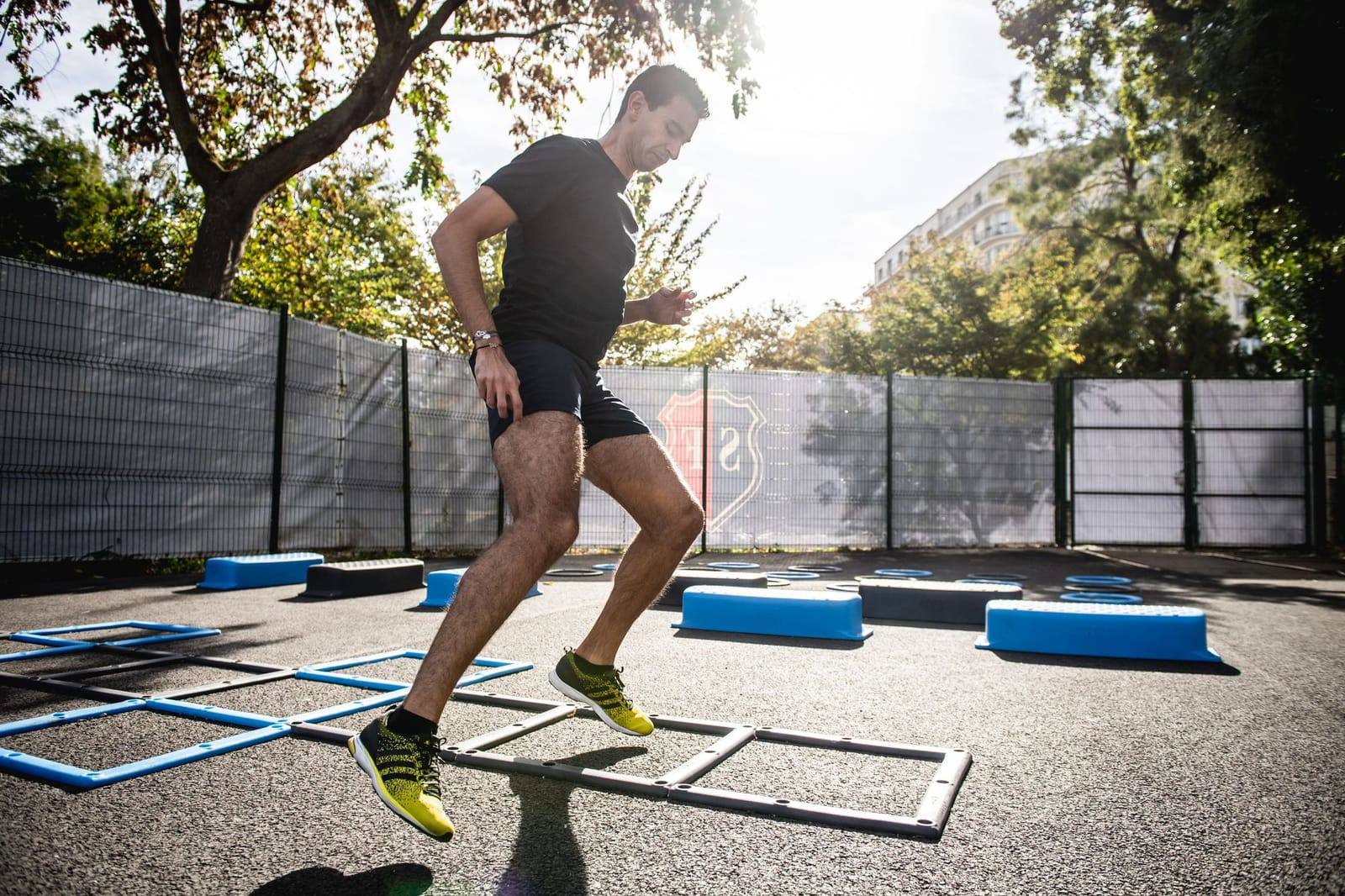
An athlete in a black shirt steps through an agility ladder outdoors in low sunlight.

Late-stage rehab and performance training: strength, power, speed and agility work with objective testing, for athletes returning from injury or surgery.

There’s a gap between being discharged from rehab and being truly ready to compete. Walking, jogging and everyday life may feel normal, but sprinting, cutting, jumping and landing ask far more of the body. Return to sport and performance is designed for that gap, and for athletes who want to train with a physical therapist’s eye on how they move.

Who it’s for

This program suits athletes in the final phase after ACL reconstruction or another knee, ankle, hip or shoulder injury, athletes who finished formal rehab but don’t yet feel ready, and active adults who want structured strength and conditioning with clinical oversight. It is also a good fit for high school and college athletes heading into a new season after time out.

How it works

We begin with testing: strength measured with a handheld dynamometer, single-leg hop tests, landing and cutting quality on video, and conditioning appropriate to your sport. Common targets include strength and hop results within about 10 percent of your uninjured side, along with good movement quality. From there your Doctor of Physical Therapy builds a progressive program covering strength, power, speed, change of direction, deceleration and sport-specific drills, often in partnership with your coach or athletic trainer.

Sessions are one-on-one. Depending on your plan, some conditioning sessions take place with our athletic trainer, always coordinated with your therapist. We retest at set intervals so you can see what has changed and what still needs work, and we write a clear summary you can share with your coach, surgeon or team physician.

The program is built to fit around a season. Early sessions might focus on strength and landing mechanics two days a week, while later ones add sprint work, reactive agility and the specific patterns of your sport, whether that is a soccer winger’s cut, a volleyball approach jump or a tennis player’s split step and lunge.

Honest expectations

Passing tests can’t remove all risk of another injury, but meeting strength and movement targets before full return is linked with a lower risk of reinjury, particularly after ACL surgery. Most athletes spend six to twelve weeks in this phase, training one to two times a week with us and more on their own. Clearance to return to competition is a shared decision with your surgeon or physician.

Young athletes and their parents often ask how long this will take. The honest answer is that it depends on the tests, not the calendar, and we show you the numbers at each retest so the timeline is never a mystery.

If you’re still early in recovery, start with ACL rehabilitation or sports injury rehabilitation. Ready for the last stretch? Book a return-to-sport assessment in Raleigh, Durham or Cary.
Why patients choose Cardinal for return to sport & performance

  • Objective testing

    Strength, hop and movement tests show where you are, not just how you feel.

  • A clinical eye on performance

    A Doctor of Physical Therapy designs your training with your injury history in mind.

  • Works with your team

    We share results with your coach, athletic trainer or surgeon when you would like us to.

  • Speed, power and agility

    The sport-specific qualities that rehab often doesn’t reach, trained progressively.

  • A clear finish line

    Retesting at set intervals tells you when you have met your targets.

What to expect, step by step

Typical plan: Initial testing session, then 55-minute sessions 1–2 times a week; most athletes spend 6–12 weeks in this phase

  1. 01

    Baseline testing

    Strength, hop, landing, agility and conditioning tests, compared side to side.

  2. 02

    Your program

    A progressive plan for strength, power, speed and change of direction.

  3. 03

    Coached sessions

    One-on-one sessions with your therapist, with some conditioning work alongside our athletic trainer.

  4. 04

    Retest

    Repeat testing at set intervals to measure progress and adjust the plan.

  5. 05

    Return and maintain

    A written summary for your team and a maintenance program for the season.

It may be a good fit if…

  • Athletes in the final phase after ACL or other knee surgery
  • Athletes who finished rehab but don’t feel ready to compete
  • Runners and court and field athletes returning after a long layoff
  • High school and college athletes preparing for a new season
  • Active adults who want strength and conditioning with clinical oversight

Between visits

  • Follow your program between sessions; most of the adaptation happens on your own training days.
  • Prioritize sleep and recovery, especially in weeks with heavy training or games.
  • Keep a simple log of training load and how your body feels.
  • Continue a neuromuscular warm-up before practices and games all season.
  • Return to full competition gradually, starting with practices before games.

Therapists who focus on return to sport & performance

What patients say

Google

Owen ran the last month of my rehab before I went back to club ultimate: sprints, cutting drills and conditioning out on the campus lawn. He and Dr. Grant tracked every test, and I was only cleared once the numbers were there. I went back to playing feeling ready instead of hopeful.

Sam R.Durham ·

Clear ways to pay

  • Superbills for out-of-network plans

    Not in-network? Pay at the visit and we’ll give you an itemized superbill with the codes your plan needs to reimburse you.

  • HSA & FSA

    Physical therapy is an eligible medical expense. Use your health savings or flexible spending card at any clinic.

  • Cardinal Membership

    After discharge, a flat monthly plan keeps you seeing your therapist, from $129 a month.

  • Self-pay pricing

    Posted prices with no surprises: evaluation from $195 and follow-up visits from $175, paid at each visit.

Return to Sport questions

Have a question we didn’t cover? Send us a note and a member of our clinical team will get back to you.

How do I know if I’m ready to return to my sport?

Feeling ready matters, but it isn’t enough on its own. We test strength, hopping, landing and sport-specific movement, and look for results close to your uninjured side. Your surgeon or physician makes the final call with this information.

What is a limb symmetry index?

It compares your injured side with your uninjured side on strength and hop tests, as a percentage. Many return-to-sport guidelines look for 90 percent or better, alongside good movement quality and readiness.

Can you work with my coach or athletic trainer?

Yes. With your permission, we share test results and your program so everyone is working toward the same plan.

Do I need to have been injured to join?

No. Some athletes come to us to train with a physical therapist’s oversight, often because of past injuries or a demanding season ahead.

Is return-to-sport training covered by insurance?

Sometimes. It is often covered as the final phase of a medically necessary rehab plan. Training after discharge is usually self-pay, and Cardinal Membership can be a cost-effective option.

Ready when you are.

Book online in about a minute. Pick your clinic and a time, and we’ll check your insurance before your first visit.