NewHurt this week? Book a free 20-minute injury screen.See complimentary screens

Just hurt? Start here (919) 555-0100

Sports Injury Rehabilitation

Expert care for sprains, strains and overuse injuries, with a plan to get you back to your sport.

Cost
From $195
Typical plan
60-minute evaluation, then 55-minute visits; most plans run 4–10 visits over 2–8 weeks, longer for tendon injuries
Insurance
Most health plans cover physical therapy for sports injuries when it is medically necessary, subject to your deductible, copay and any visit limits.
A man in a sleeveless hoodie wraps a woman's ankle on a gym floor.

Assessment and rehab for ankle sprains, muscle strains, tendon pain and overuse injuries in athletes of every level, from weekend runners to college players.

Sports injuries are frustrating because they take away something you choose to do, and often something that keeps you well. Whether you rolled an ankle on a trail at Umstead, strained a hamstring in a rec league game or developed elbow pain from pickleball, the goal is the same: settle the injury, rebuild what it needs, and get you back with less risk of it happening again.

What we treat

We regularly treat ankle sprains, hamstring, calf and groin strains, Achilles and patellar tendinopathy, tennis and golfer’s elbow, shin pain and bone stress injuries (alongside your physician), shoulder pain in overhead athletes, low back pain in lifters and rowers, and knee pain in court and field sports. We see athletes of all ages and levels, from middle school players to masters competitors. If you think you have a fracture, a dislocated joint or a concussion, see a physician first; our injury care page explains where to go.

How we work

Your first visit is a 60-minute evaluation with a Doctor of Physical Therapy, many of whom train and compete themselves. We look at the injured area, how you move, and the training that led up to the injury. You’ll leave with a diagnosis in plain language, an estimated timeline, and a plan for what you can keep doing while you recover, because staying active in the right way usually helps recovery.

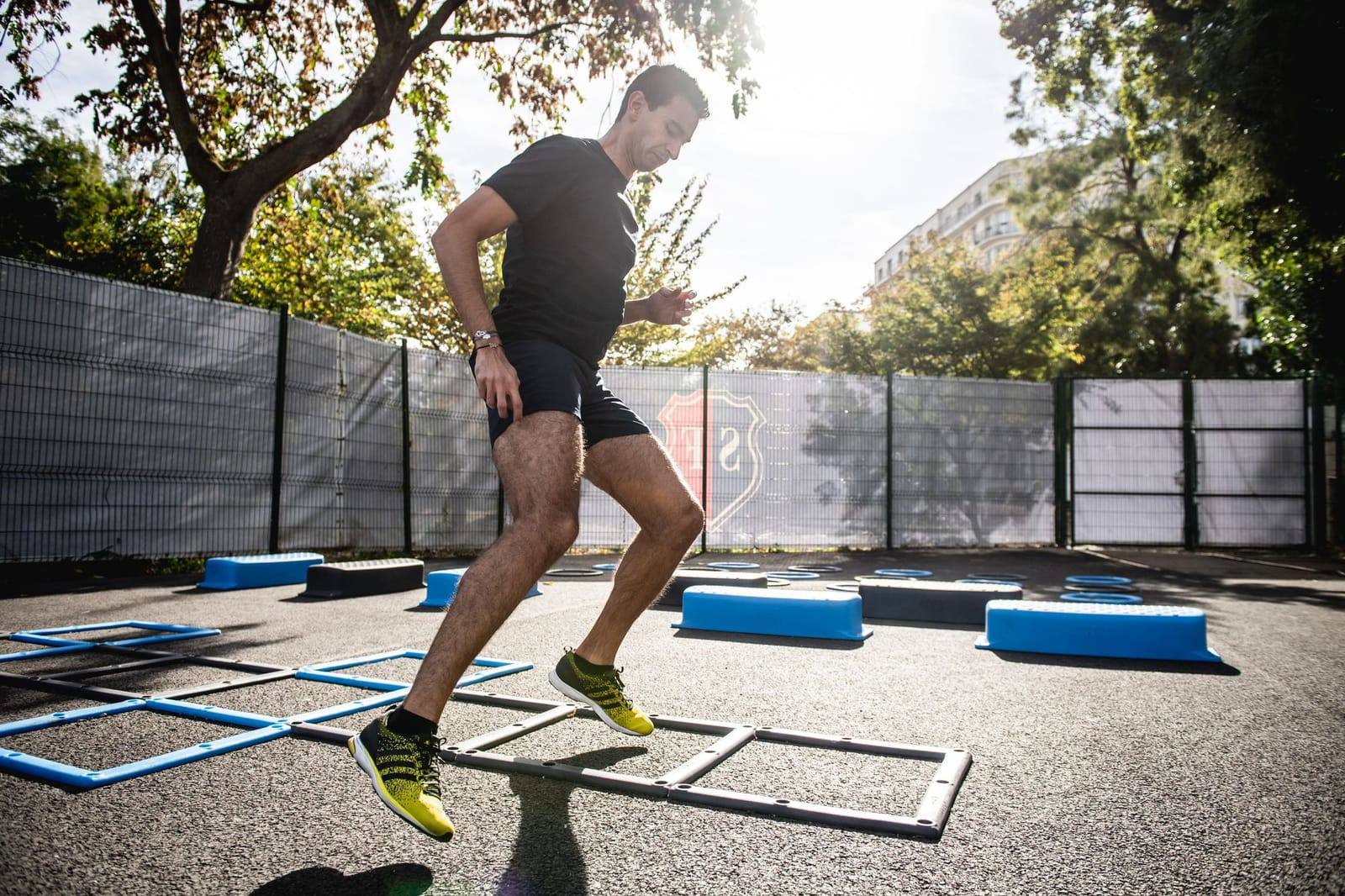
Treatment combines hands-on care, progressive strengthening and sport-specific work, such as running, jumping, cutting, throwing or swinging, as you’re ready for it. Each follow-up is a full 55 minutes with your therapist. Athletes at our Durham clinic can also train with our athletic trainer between visits, coordinated with the therapist’s plan.

For recurring problems, we look closely at the pattern behind them, such as a sudden jump in training, a strength gap left over from an old injury, or a change in equipment or surface. We also help with the practical side: what to tell your coach, how to adjust a training plan around the injury, and how to fit rehab into a season.

What to expect

Timelines vary with the injury. A mild ankle sprain may need only a few visits over two to four weeks; a significant hamstring strain often needs six to eight weeks; tendon problems can take three months or more. Most plans run four to ten visits. Returning too early is one of the most common reasons injuries recur, so before you go back to full play, we test strength and sport-specific skills, and share the results with your coach if you’d like.

You can book directly without a referral in North Carolina, and new patients are seen within two business days. Not sure how serious it is? A free 20-minute injury screen can help you decide on next steps. When you’re ready, book a sports injury evaluation in Raleigh, Durham or Cary.


Why patients choose Cardinal for sports injury rehabilitation

  • Clinicians who train too

    Many of our therapists compete themselves and understand what your sport asks of your body.

  • Stay active while you heal

    You know what training you can keep doing safely, so you don’t lose all your fitness.

  • Find the cause

    We look at training load, technique and strength to lower the chance of the same injury returning.

  • Tested before you return

    Strength and sport-specific testing help you and your coach decide when you are ready.

  • Seen within 48 hours

    New patients are evaluated within two business days, while early care matters most.

What to expect, step by step

Typical plan: 60-minute evaluation, then 55-minute visits; most plans run 4–10 visits over 2–8 weeks, longer for tendon injuries

  1. 01

    Evaluation (60 minutes)

    Injury assessment, movement screen and training history, with a timeline and a written plan.

  2. 02

    Protect and settle

    Early load management, hands-on care and exercises that keep you moving without aggravating the injury.

  3. 03

    Rebuild

    Progressive strength, power and control for the injured area and the chain around it.

  4. 04

    Sport-specific return

    Running, cutting, jumping, throwing or swinging, reintroduced in steps.

  5. 05

    Test and prevent

    Return-to-play testing and a prevention program to keep you in the game.

It may be a good fit if…

  • Ankle sprains, including ones that keep happening
  • Muscle strains in the hamstring, calf, groin or shoulder
  • Tendon pain in the Achilles, knee, elbow or shoulder
  • Overuse injuries from running, court sports, lifting or cycling
  • Young athletes with growth-related knee or heel pain
  • Masters athletes who want to keep competing

Between visits

  • Follow the activity plan your therapist sets; complete rest is rarely the best choice.
  • Build training volume back gradually over several weeks, and avoid sudden jumps in mileage, minutes or intensity.
  • Keep doing your strength and balance exercises two to three times a week.
  • Warm up properly before every session or game.
  • Sleep and nutrition matter for tissue healing, so aim for consistent, adequate sleep.

Therapists who focus on sports injury rehabilitation

What patients say

Facebook

Great care for an ankle sprain from pickup basketball. Dr. Bell had me balancing, hopping and back on the court in about five weeks, with a clear plan for each stage. The only reason for four stars is that street parking on Glenwood can be a hunt at lunchtime, so give yourself a few extra minutes.

Jordan T.Glenwood South ·

Clear ways to pay

  • Superbills for out-of-network plans

    Not in-network? Pay at the visit and we’ll give you an itemized superbill with the codes your plan needs to reimburse you.

  • HSA & FSA

    Physical therapy is an eligible medical expense. Use your health savings or flexible spending card at any clinic.

  • Cardinal Membership

    After discharge, a flat monthly plan keeps you seeing your therapist, from $129 a month.

  • Self-pay pricing

    Posted prices with no surprises: evaluation from $195 and follow-up visits from $175, paid at each visit.

Sports Injury questions

Have a question we didn’t cover? Send us a note and a member of our clinical team will get back to you.

Should I ice or heat a sports injury?

Ice can ease pain in the first few days after an injury, and heat often feels better for stiff muscles later on. Neither speeds healing much on its own. What matters more is gentle movement and a gradual return to load, which we guide.

How long does a sprained ankle take to heal?

Mild sprains often feel much better in one to three weeks; moderate to severe sprains can take six weeks or more. Ligaments keep remodeling for months, and balance training lowers the high risk of spraining the same ankle again.

Do I need to stop playing completely?

Often not. Many athletes can keep training in a modified way. We tell you what is safe to continue and what to pause, and why.

Do you see high school and college athletes?

Yes. We see athletes from middle school through college and beyond. For patients under 18, a parent or guardian completes the paperwork and is welcome at every visit.

Can I see you instead of an orthopedic doctor?

For many sports injuries, a physical therapist is a good first stop, and North Carolina allows direct access. If we suspect a fracture, a complete tear or anything that needs imaging or a surgical opinion, we refer you to a sports medicine physician or orthopedic surgeon.

Ready when you are.

Book online in about a minute. Pick your clinic and a time, and we’ll check your insurance before your first visit.